
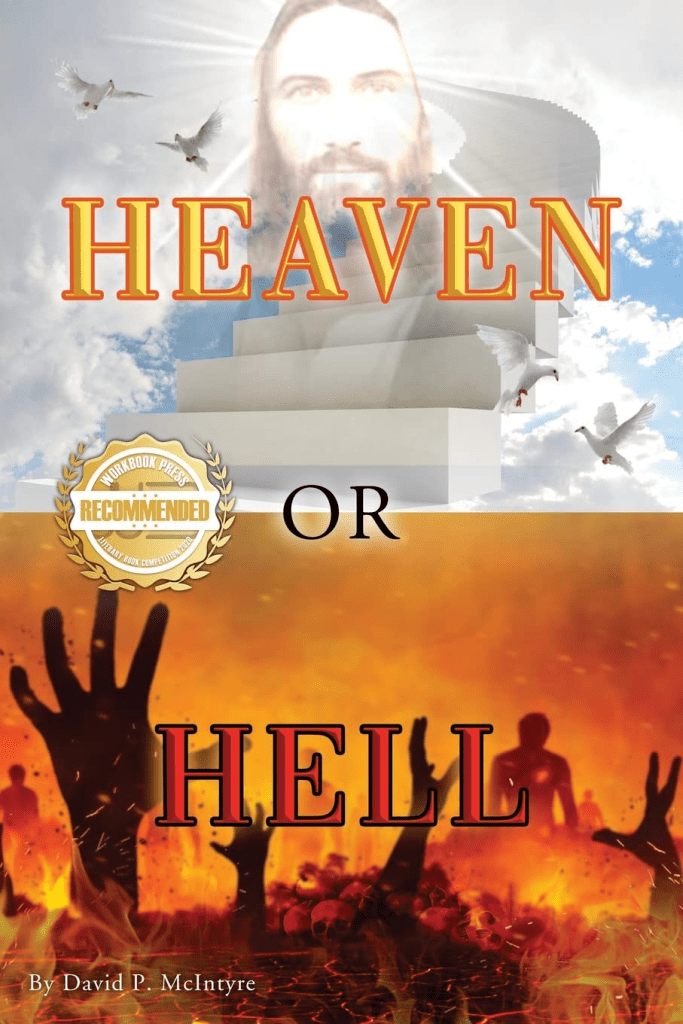
Heaven or Hell

David P. McIntyre

Explores the question: if hell exists, who will go there and why. Since the Bible says that God is not willing that any should perish but all come to the knowledge of the truth, and at the same time also that broad is the way that leads to destruction then what will be the determining factor that places people on the broad road to hell. The book takes the position that Heaven is God’s domain, where He will be and hell will be a place without God. If God is not there the book explores what hell will be like.

Testimonials

A dignified still life of academic and scientific tools symbolizing the author’s background: a polished wooden lab bench surface holding a pristine white porcelain mortar and pestle, a gleaming metal caliper, stacked graph paper notebooks, and a neatly arranged periodic table reference card with non-readable markings. Behind them, a blurred laboratory-style shelving unit holds glass beakers and volumetric flasks filled with clear and faintly tinted liquids. Cool, clean overhead lighting combines with a soft side light to create crisp reflections and precise shadows. Photographic realism, centered composition with medium depth of field, projecting analytical rigor, technical expertise, and a bridge between science education and written work.

Hope D.

David’s meticulous research and clear Christian perspective made American history come alive; our book club is still discussing The Crimson Gift months later.

A neatly stacked set of hardback books with elegant, traditional dust jackets in deep navy, forest green, and burgundy, each featuring a subtle embossed author nameplate without readable text. The books rest on a dark walnut desk beside a closed leather-bound notebook, a fountain pen, and a small brass magnifying glass. In the background, softly out of focus, stand tall bookshelves filled with orderly volumes and a vintage-style globe. Warm afternoon light from an unseen window grazes the book spines, creating gentle highlights and long, calm shadows. Photographic realism, eye-level composition with shallow depth of field, conveying a professional, scholarly atmosphere appropriate for an established author’s homepage hero image.

Hope D.

Our homeschool teens were captivated by Revolution, The Taste of Freedom; it sparked questions about liberty, sacrifice, and the faith of the Founders.

An inviting writing workspace featuring an open laptop displaying a clean, text-focused manuscript page without legible words, placed on a smooth oak desk. Around it lie neatly organized printed pages with highlighted passages, color-coded sticky tabs, and a pair of reading glasses folded beside a ceramic mug of tea. In the background, a softly blurred corkboard holds index cards and a simple calendar, suggesting a book production schedule. Soft, diffused daylight enters from the left, illuminating the scene with a calm, focused glow. Photographic realism, shot from a slightly elevated angle with balanced composition, evoking discipline, organization, and the professional routine of an experienced technical author.

Hope D.

Heaven or Hell challenged my assumptions with solid Scripture and logic; I’ve already shared it with friends who are exploring the Christian faith.

A dignified still life of academic and scientific tools symbolizing the author’s background: a polished wooden lab bench surface holding a pristine white porcelain mortar and pestle, a gleaming metal caliper, stacked graph paper notebooks, and a neatly arranged periodic table reference card with non-readable markings. Behind them, a blurred laboratory-style shelving unit holds glass beakers and volumetric flasks filled with clear and faintly tinted liquids. Cool, clean overhead lighting combines with a soft side light to create crisp reflections and precise shadows. Photographic realism, centered composition with medium depth of field, projecting analytical rigor, technical expertise, and a bridge between science education and written work.

Hope D.

Because They Said So, Isn’t Good Enough gave our adult class practical tools to evaluate cultural claims through evidence and a biblical worldview.